INDEPENDENT FICTION // ROOSENDAAL, NL

THE BLACK
GRID

Fiction for when the lights go out.

Realistic stories of collapse, civil resilience and the choices people make when the systems they trust disappear.

TRANSMISSION 001GRID: OFFLINE
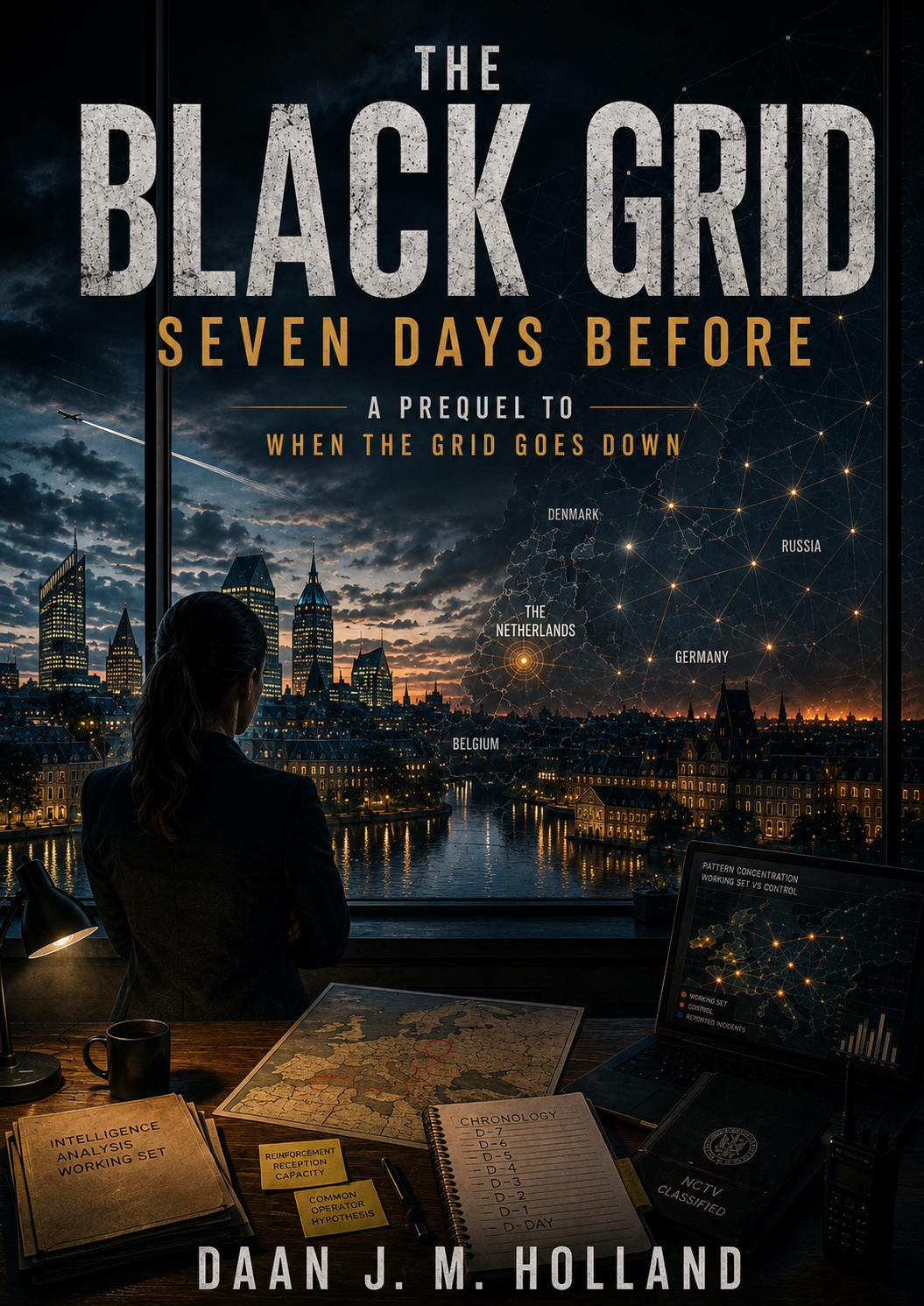
The Black Grid: Seven Days Before book cover
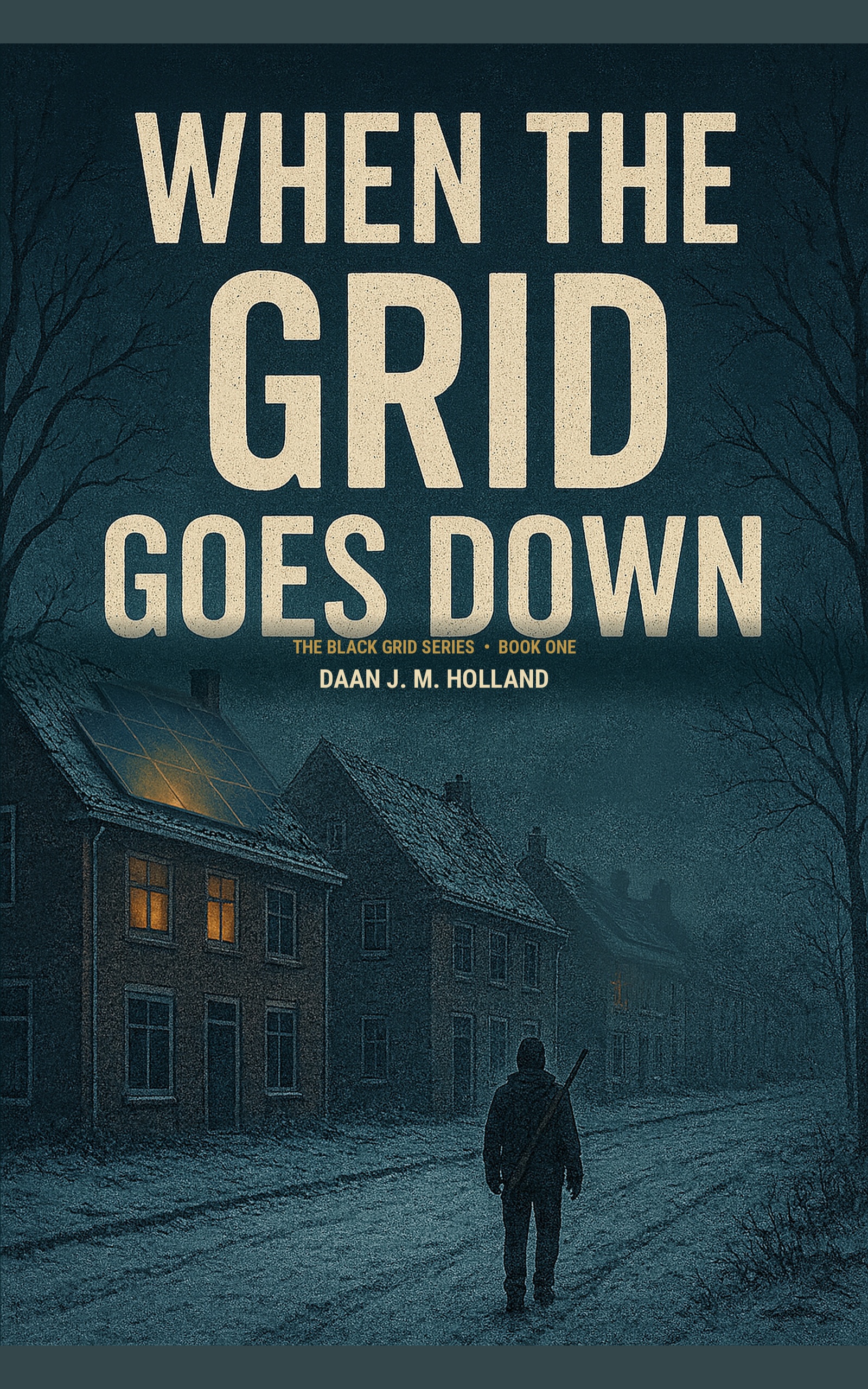
When the Grid Goes Down book cover
FICTIONRESILIENCEGEOPOLITICSCOLLAPSE

THE BLACK GRID SERIES

Stories from the edge of normal.

The warning signs are quiet. The consequences are not. Start with the blackout, then return to the seven days that made it inevitable.

When the Grid Goes Down by Daan J. M. Holland01

BOOK ONE // AVAILABLE NOW

When the Grid Goes Down

What will you do?

An ordinary Tuesday ends with a NATO alert and a dying power grid. One Dutch couple has food, water and solar power — but twenty-one days will test whether preparation can survive fear, violence and a country coming apart.

  • Realistic collapse fiction
  • Set in the Netherlands
  • Second edition, 2026
Read the opening signal
“The inverter had switched us onto the solar battery. The house stayed lit, but the city was no longer feeding us anything.”
The Black Grid: Seven Days Before by Daan J. M. Holland00

PREQUEL // ADVANCE READER EDITION

The Black Grid: Seven Days Before

The pattern appears before the panic.

A Dutch intelligence analyst notices a faint alignment across military communications, ports and transport routes. Every signal has an innocent explanation. Together, they may be the final warning Europe receives.

Read the opening signal
“The first anomaly appeared at 02:11. Jeroen almost cleared it.”

FIELD NOTES // ARTICLES

Dispatches from the dark.

Notes on resilience, infrastructure and the real systems behind the fiction.

[001]

From the author

Preparedness is not paranoia

Why ordinary resilience belongs in ordinary homes — and why fiction is the safest place to test it.

Read dispatch 4 min read

For most of history, storing food, knowing your neighbours and planning for interruption were simply parts of life. Only recently have those habits been recast as extreme. The Black Grid begins with a different premise: systems can fail without warning, and preparation can be quiet, practical and humane.

The question is not whether a character owns the right equipment. It is what that character chooses to do when fear arrives at the door. That is where preparedness stops being a checklist and becomes a test of values.

[002]

Research notes

Twenty-one days without power

A blackout is never only about electricity. It reaches water, fuel, food, information and trust.

Read dispatch 5 min read

Modern infrastructure is a chain of dependencies. Mobile networks rely on backup power. Fuel stations need electricity to pump. Card payments need communications. Water pressure, logistics and emergency response all begin to strain at different speeds.

That interdependence shapes the novel's twenty-one-day timeline. The tension does not come from one spectacular failure, but from each ordinary service becoming uncertain — and from people making decisions before they understand the whole picture.

[003]

Behind the story

The quiet before the warning

Seven days before the grid fails, the signals are already there. The problem is deciding what they mean.

Read dispatch 3 min read

The prequel moves upstream from the blackout into the rooms where fragments become assessments. A changed flight plan, a burst of encrypted traffic, an attempted login at a port: each clue has an innocent explanation until the pattern becomes impossible to ignore.

The suspense lives in uncertainty. Analysts must distinguish preparation from coincidence while institutions resist conclusions that are too early, too disruptive or simply too frightening to accept.

ABOUT THE AUTHOR

Daan J. M. Holland

Writing the moment before certainty disappears.

Based in Roosendaal, the Netherlands, Daan J. M. Holland writes grounded speculative fiction about fragile infrastructure, geopolitical pressure and the human instinct to endure. The Black Grid series asks a simple question with no easy answer: what do we owe one another when normal life stops?

Return to transmission